Questions and Answers
Why Did I Decide to Run for School Board in Sunnyvale School District?
Both of my children attended Sunnyvale School District their entire K-8 years, I taught in the district for 4 years, and from 2015-18 I spent nearly full time working with dedicated teachers and amazing students as a volunteer in elementary and middle school classrooms in this district. I love the kids, and I love the teachers and staff. Even with dedicating a lot of time, my impact with students was personal and rewarding, but small in the big picture.
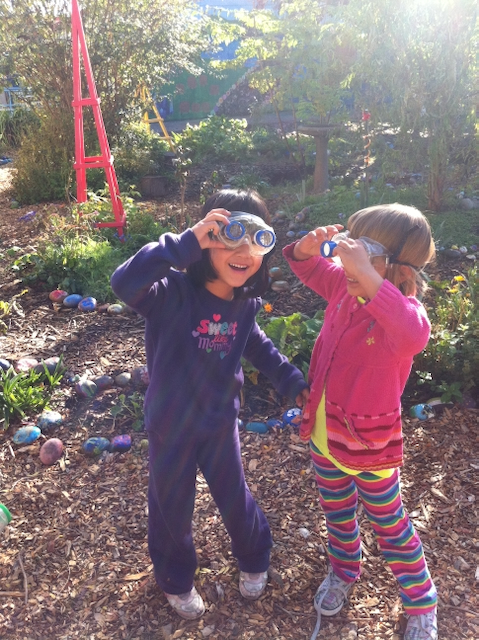
I also feel very connected to the parents and the community overall. In 2008-9, when I was in treatment for breast cancer, not only my friends and neighbors, but also many people I had never met before reached out to me with meals, notes, cards, and messages of support for my whole family. It really made me want to dedicate my life to serving my community. After this experience, and a year of working hundreds of hours developing an all-school garden program at Cherry Chase Elementary, I went back to school to get my teaching credential.
A seat on the school board is a way to help support our schools and the students at the next level. It’s literally a seat at the table to help shape policy that affects our whole community. If problems are bigger than our district – trustees can and should advocate at the City, County, State, and Federal level. I am still volunteering in Sunnyvale School District today, even though my children have aged-out of the district, I’m teaching part time at the Fremont Union High School District (FUHSD) Adult School, and I am working as a trustee every day.
After 8 years in office, with new trustees and a new superintendent, I’m excited about the chance to continue serving Sunnyvale in the trustee role. Elected in a Trustee Area, we serve the whole District, and it’s my intention to support the transformative work ahead. We have the people and the means – we can dramatically close that opportunity gap and keep the Sunnyvale Promise – That every child is known by name, strength and need, ready to excel in high school and beyond, and to lead a life of joy and purpose..
What will be your focus for the next 4 years?
This term I am personally focused on building trust and transparency, increasing student and family empowerment, and co-creating a culture of high expectations and academic success for all. I also want to support and build up our governance team and local leaders who may be interested in running for school board one day in the future – this job is a sprint, a marathon, and a relay.
Initial 2018 Goals and Progress For people who may not know me well, or who do not follow the details of school board meetings and activities, here is the status of a few of the issues I ran on in 2018. (I was unopposed in 2022):
- More Early Childhood Learning: In 2018, I dreamed we would provide more preschool and Transitional Kindergarten (TK). Since then, we’ve added TK at every school. We now have an opportunity to expand our preschool further, and to re-imagine what early childhood learning can look like in our district – play-based, child-centered experiences, building independence and confidence so that they are ready to learn by first grade. I will advocate for our program to follow researched based practices, using Stanford’s Bing Nursery School as a model.
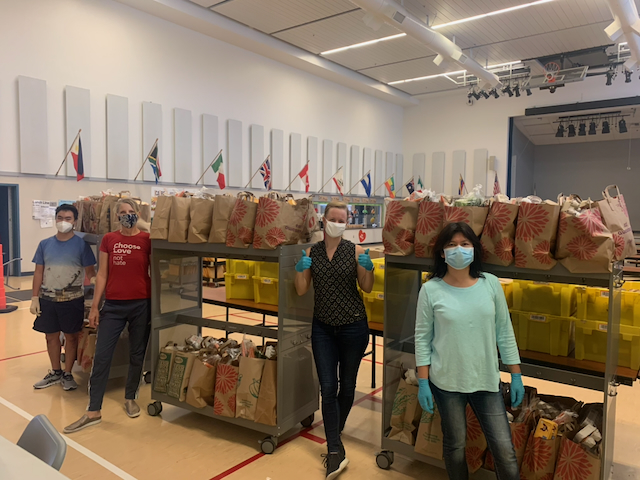
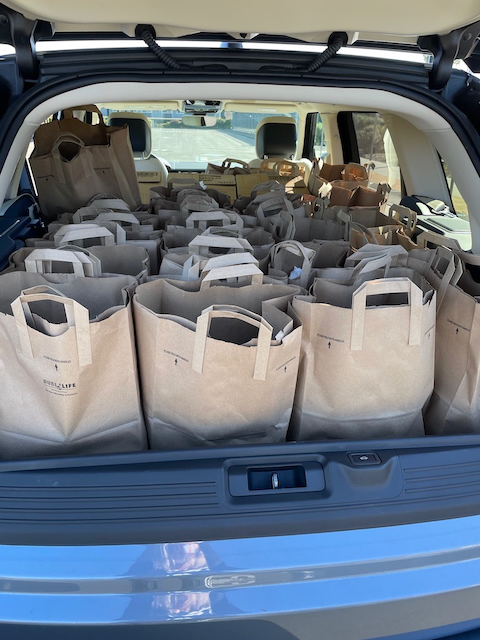
- More Basic Needs Support Where It’s Needed: In 2018, I argued that we should provide more support close to where the needs are in the community, and that we should seek funding for these through community partners, basing those supports on teacher and staff recommendations. During the pandemic, we added Multilingual Community Outreach Coordinators at every school, so that we could support students and be a resource for families. More recently, during the government shutdown, we partnered with the Sunnyvale Education Foundation and Second Harvest Food Bank to get groceries to our families when school was not in session. The outreach coordinators have been helping families with their emergency immigration plans. We need to continue to listen to our most vulnerable families during school intercession periods, so that we can find ways to support our students and they can grow.
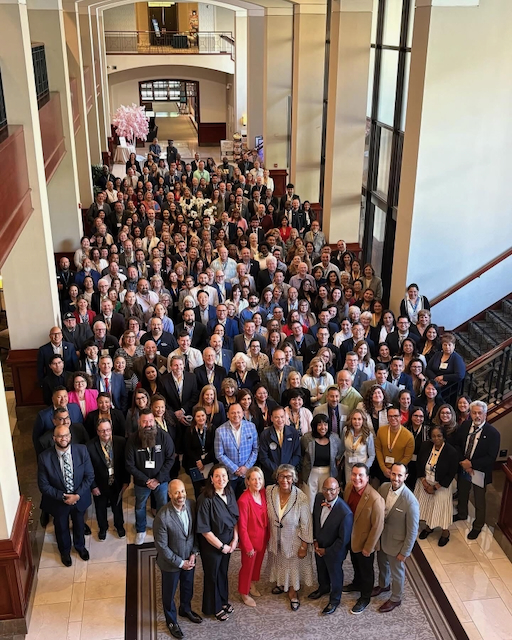
- Build Knowledge of Best Practices: In 2018, I felt compelled to explore first-hand what other districts and schools are doing who have been successful with similar challenges, and evaluate whether those policies might work in our community. I’ve done that alongside my colleagues, attending conferences, following up with district visits, and spending the last 6 years working on SCCSBA’s Hoffmann awards. Reaching out in this way, doing the research, and building thought-partnership with colleagues permits me to ask better questions on the dais and allows our governance team to make better decisions for the direction of the District.
- Science Camp Directly Supported By the District: I ran on this idea in 2018, and in collaboration with colleagues serving on the Sunnyvale Education Foundation (SEF), we were able to convince the District to change its previous inequitable practice of requiring students to pay their own way to Science Camp. SEF continues to partner with the district and to raise funds to support this new practice.
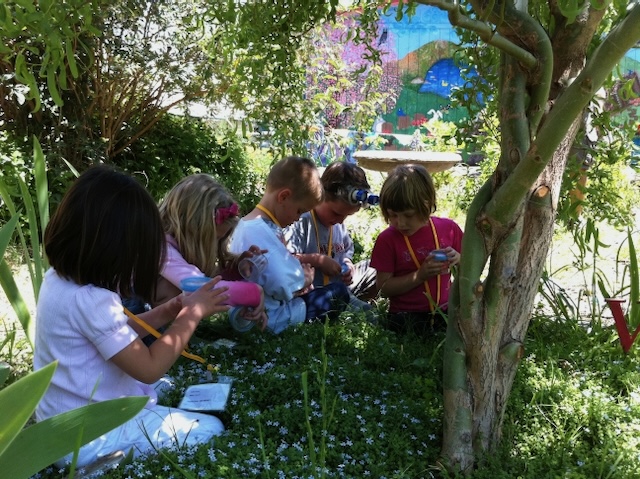
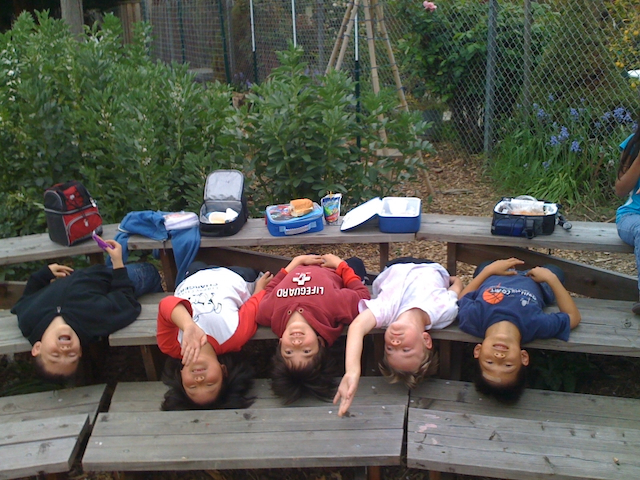
- Outdoor Learning with Living Classroom: This May, the Board approved an agreement with Living Classroom to provide a garden-based education for the 2026-2027 school year, serving students in grades TK-7th grade. I started volunteering in our neighborhood school garden in 2005, and equitably providing hands-on, standards based, inclusive lessons for all students has been a goal of mine since I joined the board. Sustainable opportunities for outdoor education at all school sites was one of my platform ideas in 2018. I hope that within the next 4 years we can find a way to have all 8th graders attend an outdoor learning experience at Yosemite as a capstone field trip that aligns with the California standards.
- Prioritized Student Mental Health: In 2018, I argued that all students, and especially some vulnerable groups (immigrant students, LGBTQIA+ students, students with special needs, students who have experienced trauma, and others) needed advocates at the district level. Many students are under pressure that is new to us – social media, information overload, and a more contentious contemporary social environment. Social skills are healthy coping skills and life skills that can serve our students beyond 8th grade. Together as a Board, we have prioritized the investment of resources that support student mental health and social emotional wellbeing. At the local, State, and Federal level, I have spent countless hours advocating for student mental health legislation and funding.
- High Expectations, High Academic Achievement: Since 2018, I’ve been arguing that we have to challenge our students who are academically advanced, and give everyone access to academic rigor. We want all students to grow a lot during their time in our district, and to develop intrinsic motivation. We have to create and nurture a scholarly culture with high expectations for all students. Back then, I felt we could have done better district-wide. With the recent Orenda study, we’ve uncovered that this is still an issue. We are working on structural changes to allow more access to core and advanced curriculum, more extended time for remediation and extension, more robust first-instruction, more targeted intervention and more collaboration for teachers to plan and deliver the best education possible. We are also looking at ways to provide more classes where our students can earn high school or even college credit while in middle school.
- Workforce Housing: In 2019, we created a JPA with SSD, CUSD, and FUHSD. We need to retain our teachers and staff who are being priced out of the district in housing. We spend a lot of time and money training teachers, and then they leave. We are losing highly qualified teachers, when having highly qualified teachers has been proven critical to student success. We have looked at some successful models other districts in the Bay Area have tried – whether working directly with a developer or purchasing into a partnership. There is more work to do in this area.
What are some other board actions you’re proud of?
This has been an active and dynamic board, and over the last several years we’ve worked progress towards many issues that have improved student experiences and outcomes.
- All middle school students get an elective: It’s hard to imagine that a whole group of students would not get an elective. Until 2020 when Trustee Jubes-Flamerich came on board and we had the votes, not all students had an elective in our middle schools. Our Long Term English Learners (LTEL’s) were denied access to an elective, creating self-esteem issues as well as a lack of engagement opportunities. Electives in middle schools provide an opportunity for students to work on their English in environments where they are deeply interested, whether it’s art, music, computer science, culinary arts, or leadership. Students still receive intensive English instruction, but they are no longer excluded from the classes that bring joy, highlight their creativity, and attach them to school.
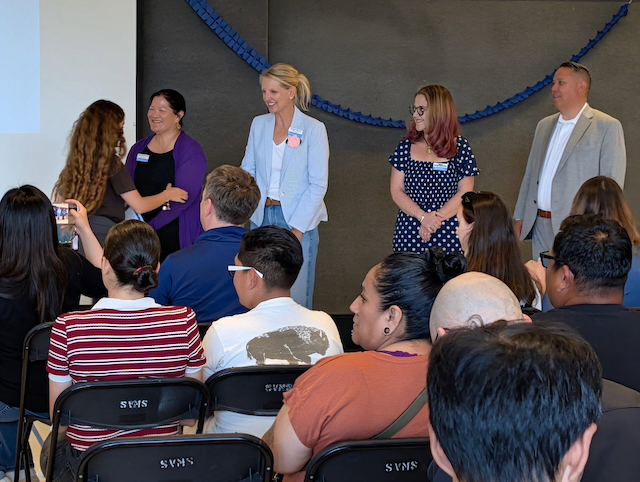
- Increased Family Voice: In addition to regularly meeting one on one or in small groups with community members, since 2020 we’ve established board office hours for families across the district. Additionally, for programs like Juntos, we’ve advocated with families for a Juntos Advisory Committee so that families can help us make the program stronger together, TK-8. The first steps of this committee were underway this year, and we look forward to a full roll out in 2026-27. Our new Superintendent has several new committees for family involvement, and we are re-vamping our DELAC process so that it’s broader and there will be more discussion and topics will be driven by the parents. Since 2021, our board meetings have been available in English and Spanish, and we are currently exploring a contract with a real-time translation service for multiple languages for use at Back to School Nights and Open Houses for our Multilingual families.
- ELA/ELD Pilot and Curriculum Adoption/ Science of Learning: We have been advocating for several years for a revamp and new curriculum pilot for materials based on the Science of Learning, which has been shown to be more effective for multilingual students. Additionally, for a district with many Multilingual Learners, we shamefully did not have a current ELD curriculum. The Board approved a pilot process last August that involved teachers from start to finish, and we adopted the Curriculum this June to roll out in the 2026-27 school year.
- Immigration Support: Sunnyvale School District has a wealth of cultural diversity and a variety of immigrant communities. Our governance team drove the initiatives to educate our families on their rights, provided staff and family training, revised our safety protocols, and now offer emergency planning support through our outreach coordinators for families who needed it. We continue to follow Federal, State, and local policies that impact our immigrant communities, and advocate with other electeds to consider the needs of our students and mixed immigration status families. Most importantly, we are working hard to create a culture of belonging and safety at our campuses.
- Comprehensive Plan for the Arts: Inclusion, Cultural Responsiveness, Rigor, and Joy: Our arts program has not had enough community input or board review, even with the additional California Proposition 28 funding. This spring, Sunnyvale launched a collaboration with teachers, administrators, families, and the County Office of Education to develop a rigorous, culturally responsive, inclusive arts program plan with a curriculum for Board Approval in the 2026-27 school year. There are well-known connections between music and math learning, and the dramatic arts provide a unique opportunity for all students to write, produce, act, and perform – developing their oral language, communication skills, and confidence. I’m looking forward to updates on how this effort is developing.
- Services for Homeless and Foster Youth: Pre-pandemic, our district served about 7 unhoused youth each year. These students could be in homes doubled up with other families, living in vehicles, camping, or living in a shelter somewhere in Santa Clara County. Since 2020, we’ve seen that number grow, and today we have about 55 students who are currently registered as unhoused students. We have improved our procedures and outreach at the local shelter, supporting students and families with transportation and thereby drastically improving attendance. Additionally, we have revisited the many services and offerings available to support these students at our schools: social workers, guaranteed after school care, community outreach coordinator support, counseling, etc. We work closely with our partners at Sunnyvale Community Services and other agencies to make sure our students have what they need during this difficult time.
- Late Busses: Participation in tutoring, sports, and activities for all: As part of our Home to School Transportation Plan, our initial rollout had only the beginning of day – and – end of school day services. We have been able to direct the district to provide late busses at our middle schools, so that all children have the opportunity to join tutorials, activities, clubs, and sports without losing their ride in the afternoonWe need to do more with expanding our offerings and outreach about transportation for them at each of our school sites, but the foundation is there for safe, reliable transportation to and from school sites for all students.
- Collaboration with the High School District: Transitions to 9th grade: Our board directed the district to reach out to Education Partners and Fremont Union High School District (FUHSD), and President Shen Brewster and I met with officers on the FUHSD board to shepherd the opportunity to their management team. Both districts are engaging in a cohort that begins this summer, wherein superintendents, principals, and teachers from Columbia Middle School, Sunnyvale Middle School, Fremont High School, and Homestead High School will meet with other teachers and admin from across California to discuss best practices for instruction and grading in mathematics and beyond.
- Increased Affordable, Reliable, High Quality Childcare: As a board we have doubled our affordable, reliable, high quality childcare afterschool across the district, and we will continue to expand and refine our offerings. In addition to relieving a burden on families, onsite afterschool care allows the district to incorporate tutorials, and even double-dose tutorials, as well as enrichment. Providing childcare at school alleviates the need for our middle schoolers and high school students to provide it, and frees up the teenagers’ time for homework and other activities.
- Expanded Tutoring: The District is developing partnerships with tutors, both after school and targeted high-dosage tutoring during the school day. Previously, the Board was told that no one teaches better than a teacher, so only in-district tutorials by credentialed teachers would be offered. Many of our teachers, however, could not take on the additional adjunct hours, and even when they did so, their impact was somewhat limited because the District requires large tutorial sizes to qualify for paid duty. This year we’ve partnered with Bay Area Tutoring and some student groups to begin providing high dosage tutoring and additional homework help for kids who need it.
- Summer School Expansion and Focus on Academic Recovery. This year we are serving almost 1000 students at three school sites in Summer School, and the focus has shifted from “enrichment only” to academic recovery with enrichment, so that it’s not all on the classroom teacher to bring their students to grade level. Additionally, summer school is full day, more after school day care is provided, and transportation is provided to remove barriers to participation for working families. All student services are available during summer school – library, counseling, social services, student nutrition, home to school transportation, etc. We are continuing our collaboration with Stanford University, but more of the teachers are our district teachers this year than in most previous summer school years.
- Increased Student Voice: This past year, we’ve had regular student reports at our board meetings. Next year, we will begin to have student board members serving on the dais. These leadership opportunities will involve training and mentorship from board members and district teams. They will not only report on what is going on at their schools, but will also have the opportunity to discuss issues that impact their peers and the future. They can cast a student vote, ask questions, and share their thoughts on record about issues presented to the board. I’m very excited about this prospect as a way to bring more student focus to our work.
- Increased Teacher Voice: This year we implemented staff office hours for the school board at each of our 10 schools, and we plan to continue these listening sessions next year. We have also requested reminders and calendar invites to staff for Board meetings, which I will advocate for implementation next school year. Many of our Board Policies and Administrative Regulations already require extensive input from teachers, however over time some of these best practices were eroded. We need to move away from a top-down approach to implement the systemic changes ahead. Instead, we need to give teachers time to collaborate towards our systemic change together, and allow them to envision and co-create the path ahead. The Board needs to continue to hear more directly from teachers and staff as well. Staff Office Hours will continue next year.
- Systems Exploration/ Baseline development: I’m extremely proud that we hired Orenda to get a baseline study of how our systems are serving children. This study highlighted both strengths and areas for growth to better meet the needs of all of our students. I’m also proud that we are taking action based on their recommendations. Among other things, …
-
- We will increase access to our Algebra by 8th grade with support for students who need it.
-
- We will move to letter grades in middle school so that students who take Algebra and other high school classes (Geometry, Spanish, etc.) can get credit for them.
- We will eliminate classes like “Office Aide” and “Teacher’s Aide,” adding 4 hours/ week of academic instruction to these students’ schedules
- We will improve transparency by re-calibrating our grading scale to better inform parents of what their elementary students’ grades mean.
- Advocacy to Support Students – with evidence of movement in the discussion at the State and Federal levels. Since founding the SCCSBA Legislative Action Committee with several other trustees from around Santa Clara County in 2021, we’ve advocated for resources that support Student Mental Health, English Learners, Special Education, and Socioeconomically Disadvantaged students across the State, County, and our own district. I’ve also helped initiate the SCCSBA SUCCESS Collaborative, in an effort to improve conditions for students and families at local homeless shelters, to improve connections between school districts and students in these facilities, and to provide information about best practices to trustees across the county so we can better support our McKinney Vento students. As a result of 5 years of relationship building and advocacy, we have helped move the conversation to additional Statewide funding for Special Education, student nutrition, student mental health, and the impacts of immigration policy on students. We have established some networks of trustees and need to grow them countywide and statewide. We have more work to do in these challenging times, and our voices are stronger together.